
Every fall, our team fires up the smokers, prepares a spread of homemade sides, and hits the road to deliver hot meals directly to growers working in the field.
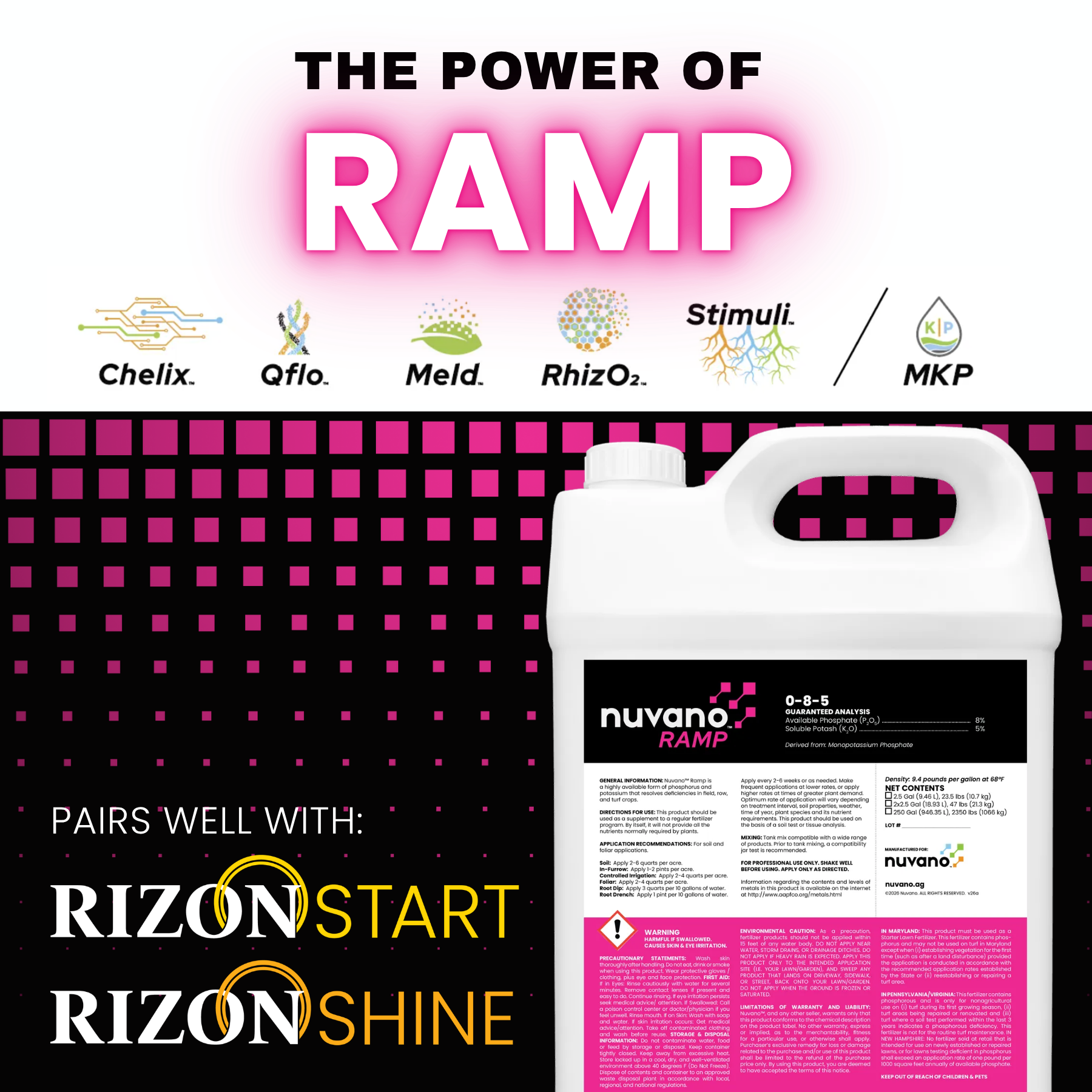
Ramp is a water-based, 0-8-5 formula designed to improve starter fertilizer delivery and efficiency while encouraging early root development.
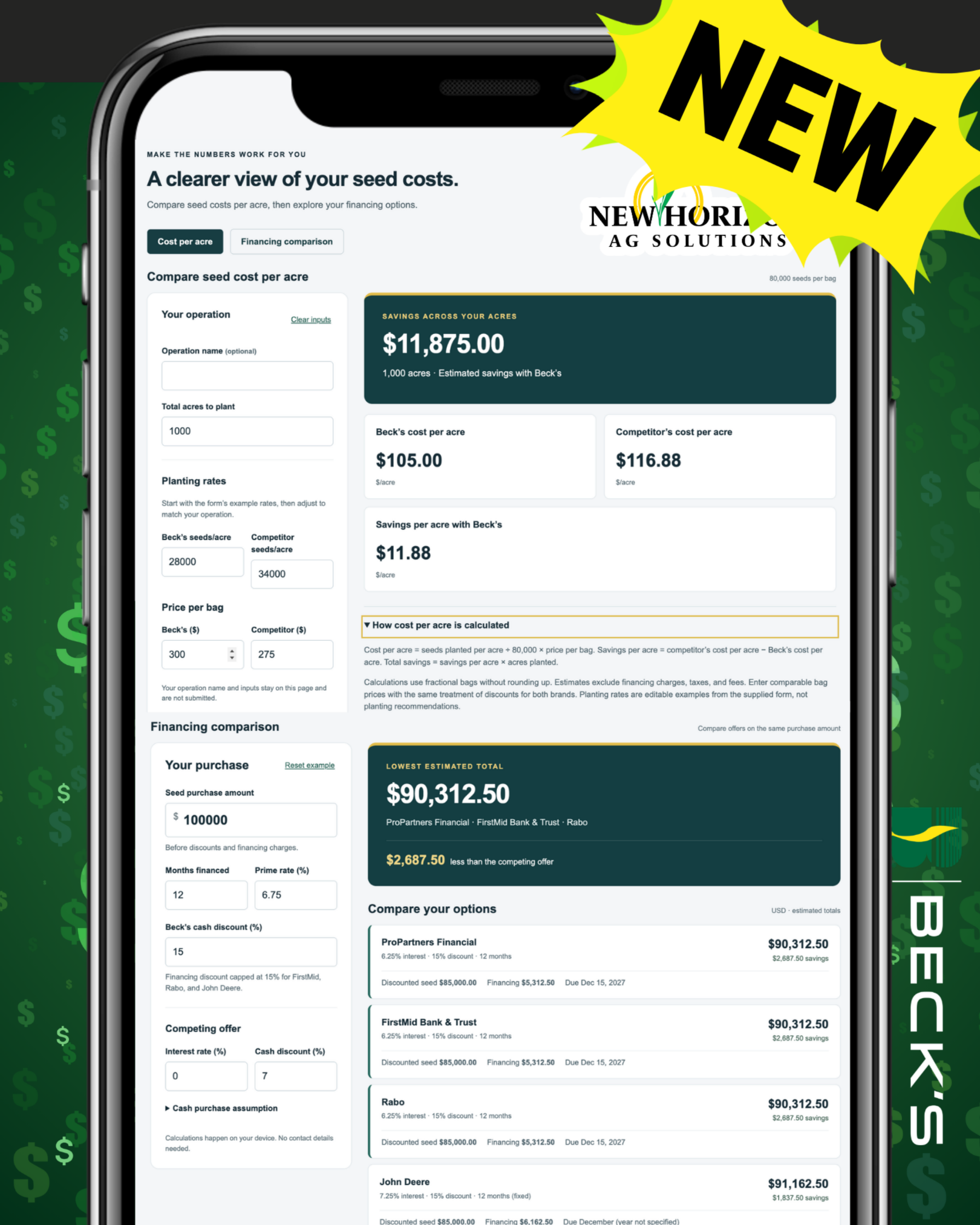
Take a closer look at the prices on seed bags. Our financing calculator gives you a practical starting point for understanding costs and comparing options.
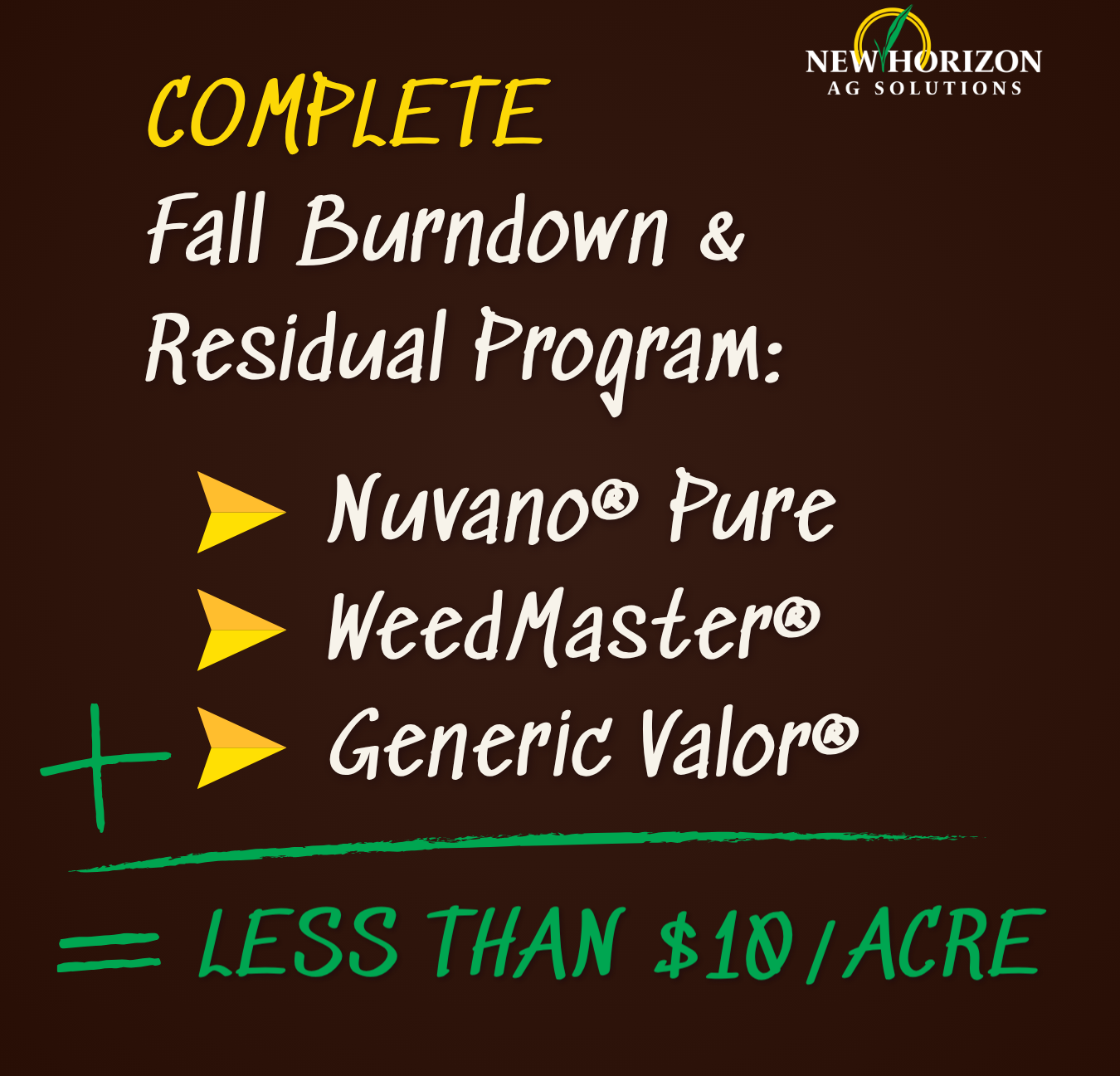
New Horizon Ag Solutions offers a complete fall burndown and residual herbicide program for under $10 per acre! Featuring Nuvano® Pure, WeedMaster®, and generic Valor®.

Great seed starts the season. Great support carries it forward. We’ll help you build a seed plan around your acres, management style and goals.

Become a dealer of Nuvano or Nano-Yield products and give your customers access to solutions designed to help them get more from every acre.

Beck’s SeedIQ™, the industry's first product management platform. Data-backed tool that delivers personalized corn and soybean recommendations. Take the quiz!

Complete fungicide programs for corn and soybeans starting under $25/acre. Professional aerial application powered by Nuvano® Pure and Nano technologies.
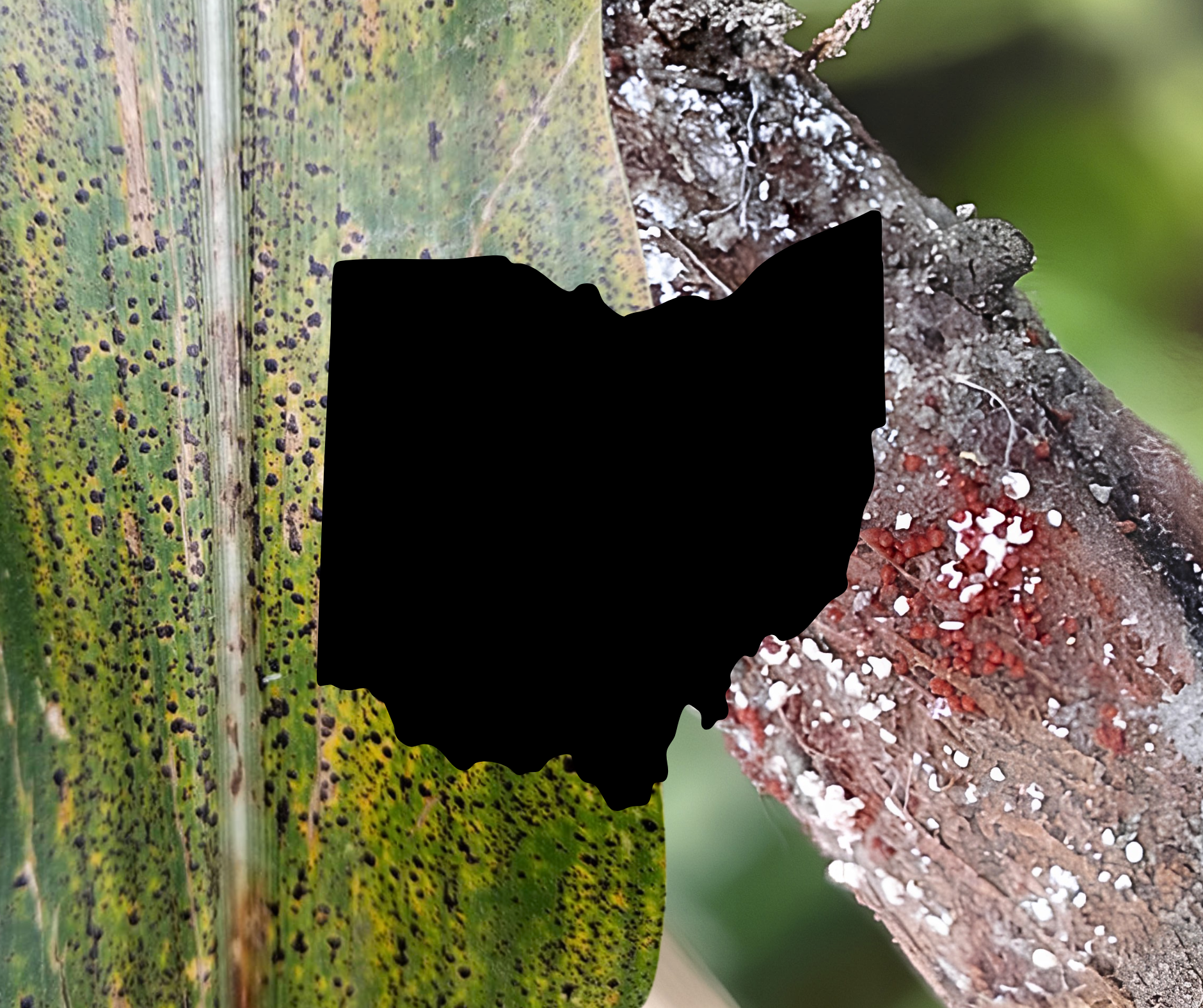
Ohio growers: Learn how to stay ahead of Tar Spot and Red Crown Rot with timely fungicide applications, proper water conditioning, and foliar nutrition.
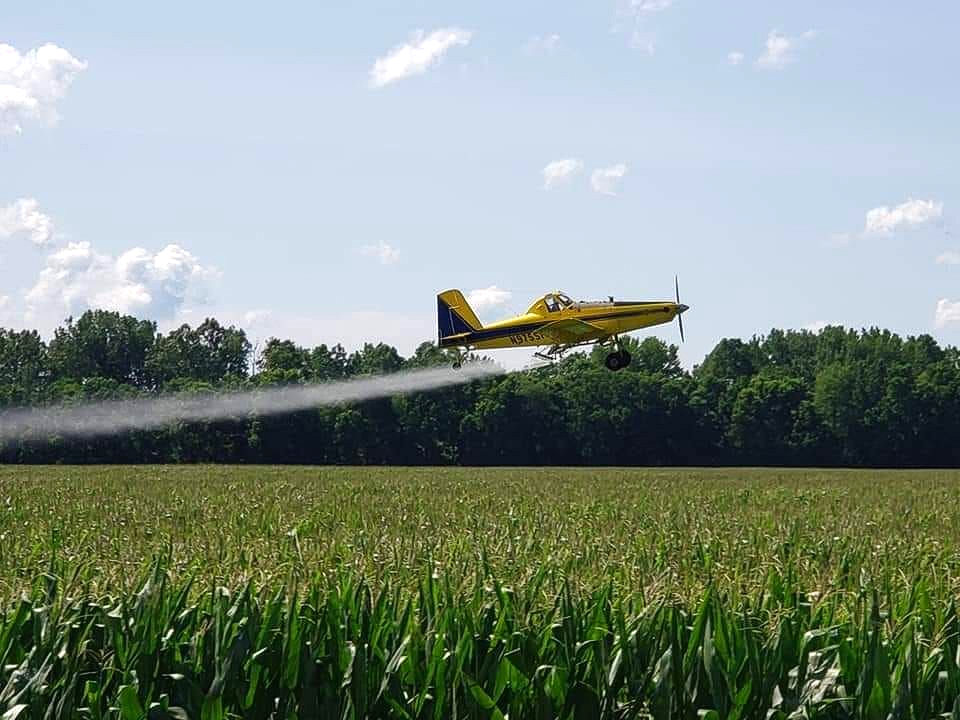
Every trip across the field costs time, fuel, and money. Many growers choose to pair Nuvano Pure, RizonThrive, and nanotechnologies to optimize foliar passes.